Navigating divorce while owning a home is tough. This guide explains if a judge can force your house's sale, what happens if one spouse doesn't want to sell, and how to protect your interests. Learn your options to sell your home fast and with less stress.
Key Takeaways
- Divorce courts can order a house sale if spouses disagree.
- Fair property division is the primary goal in divorce.
- Options include one spouse buying out the other, selling, or a judge deciding.
- Ignoring a court order to sell can lead to fines.
- Separate property (like gifts or inheritance) is usually safe from division.
What Happens to Your Home in a Divorce?
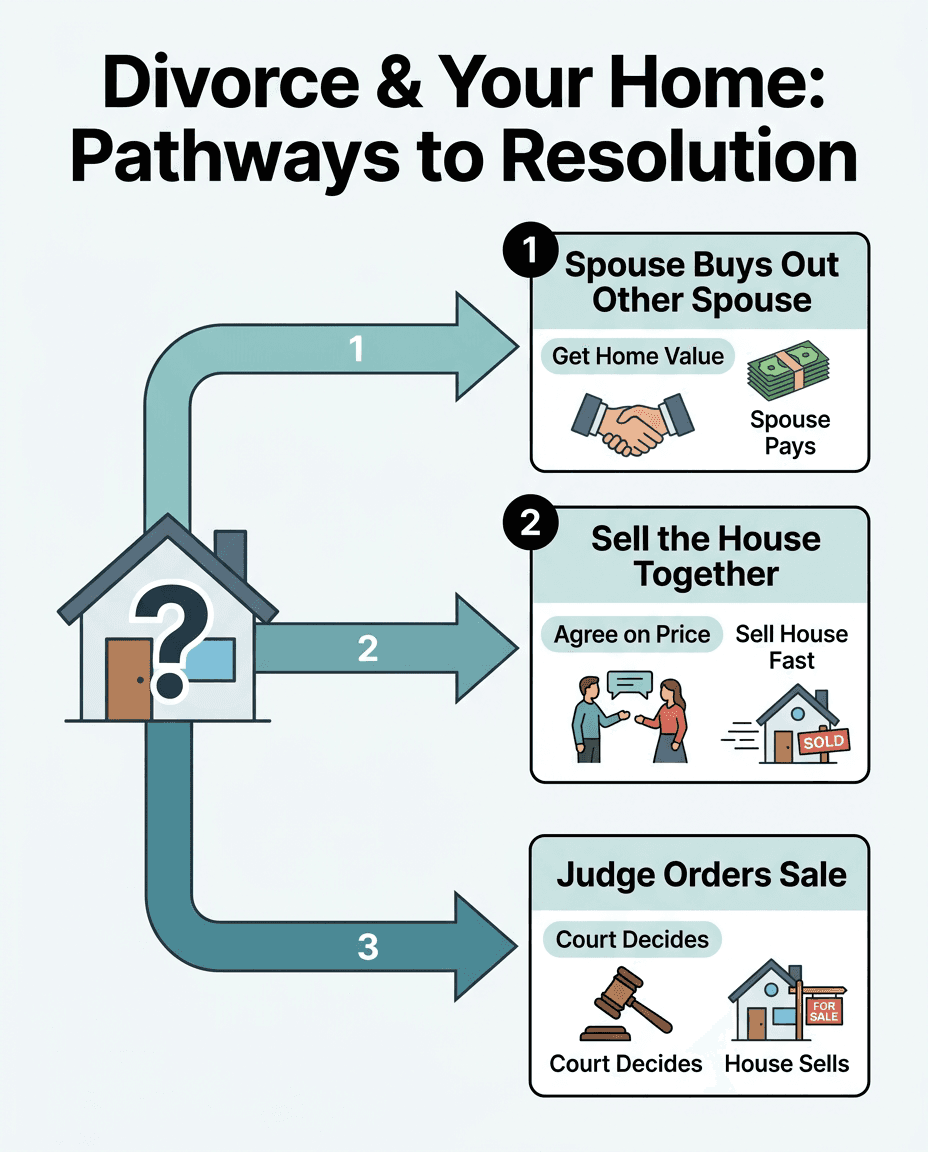
When you divorce, your shared home's future becomes uncertain, but you have options. Divorce can be a tough time. Deciding what to do with your family home is a big part of it. Your home is often your largest shared asset. How you handle it can affect your finances for years. States follow different rules for dividing property. Many use "equitable distribution." This means a court divides marital property fairly, but not always 50/50. They look at things like each person's income, health, and who cares for the children. Here are the most common ways to deal with your home:- One spouse buys out the other: One person keeps the house and pays the other for their share. This often needs a new mortgage.
- Sell the home: Both people agree to sell the house. They then split the profit. This can provide a clean financial break. For a fast sale, exploring options like HouseGoodbye.com can be helpful. We buy houses quickly for cash.
- Judge decides: If you cannot agree, a judge will decide for you. The court considers the children's needs and each person's ability to afford the house. Cornell Law School's Legal Information Institute has more details on equitable distribution laws.
Can a Divorce Court Force the Sale of Your House?
Yes, a court can often order your house sold during a divorce, especially if you and your spouse cannot agree.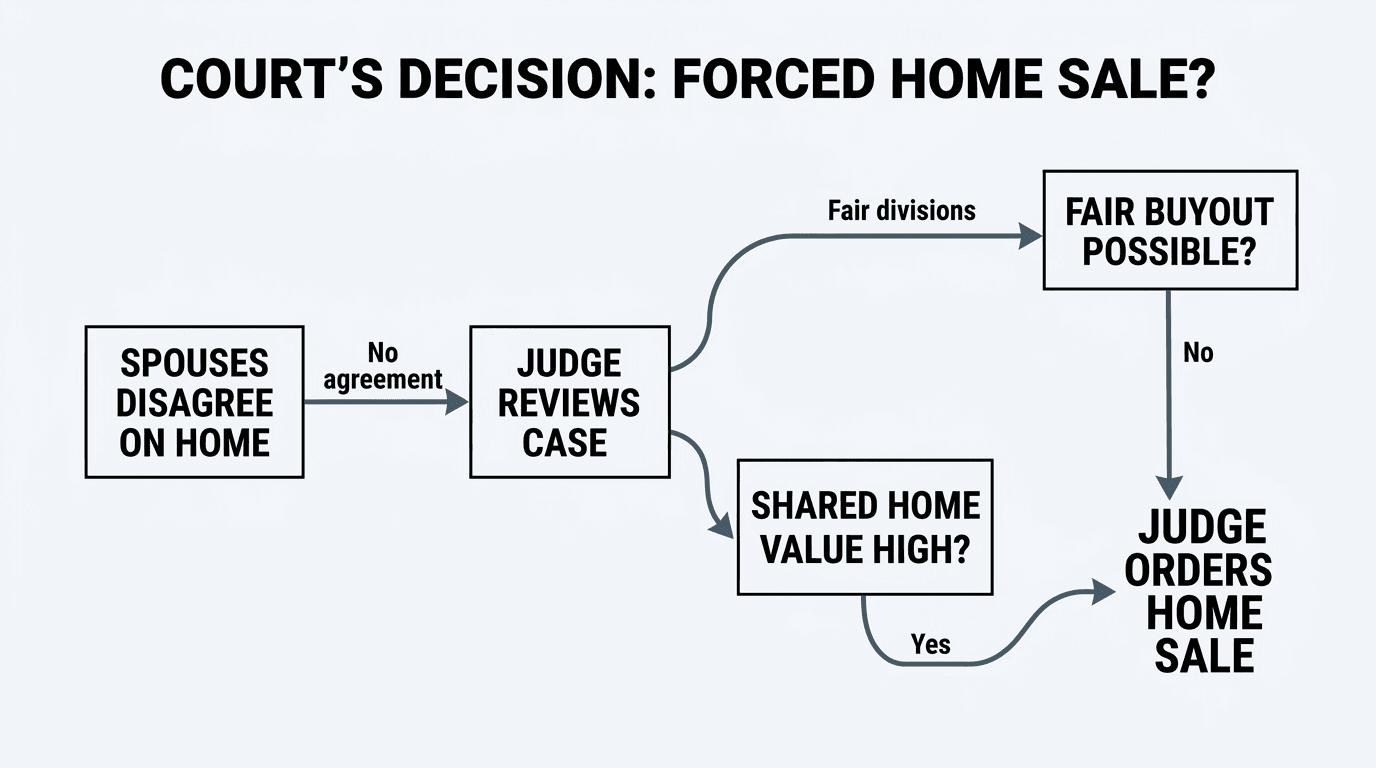
Flowchart showing when a judge might order a forced home sale in divorce. Can divorce force sale of house.
Divorce courts aim to divide marital assets fairly. This process is called "equitable distribution." Your house is often your largest shared asset. If you and your spouse cannot agree on what to do with the home, a judge might step in.
Selling the house is usually a last resort. Judges prefer that couples work out solutions together. However, if no agreement is reached, the court has the power to order a sale. The money from the sale then gets divided fairly between both parties. This answers the question, can divorce force sale of house.
Rules for forced sales differ based on where you live.
- Illinois: Judges often have broad power. They can force a sale even if one spouse does not want to sell it. This helps ensure fair shares for both people. You can find more about dividing assets on the Illinois Courts website.
- Georgia: A judge can require selling the house if it is the fairest choice. This applies when other options would not be equal for both people.
- North Carolina: Only the court can order a sale. One spouse cannot make the other sell without a judge's order.
- California: Your lawyer should know your wishes about the house early on. This helps them argue your case best in court.
What if One Spouse Doesn't Want to Sell the House?
It's common for one spouse to want to keep the house while the other prefers to sell it during a divorce. This is a very common problem when couples split. One person may want to stay in the family home. The other might want to sell it to get their share of the money. Both feelings are normal during a tough time like divorce. If you both agree, one spouse can buy out the other’s share. This means the spouse who stays pays the other for their half of the home's value. For example, if your house is worth $300,000 and you owe $100,000, your equity is $200,000. One spouse would pay the other $100,000 to keep the house. You might also agree to delay selling it until a child finishes school. If you cannot agree, a court may have to step in. A judge can order the house to be sold, even if one person doesn't want to. This is often called a court-ordered sale. The court’s goal is to divide your joint property fairly. You can learn more about how judges manage property in our article, Understanding Separate vs. Marital Property. Ignoring a court order to sell the house can cause big problems. You could face fines or be held in "contempt of court." This means you did not follow a judge’s command. It is always best to work with your lawyer and follow court instructions. For more details on rules about property division in divorce, you can check resources from the American Bar Association Family Law Section.How to Avoid Selling Your House in Divorce
You might keep your home even during divorce. Selling your house is not always the only choice in a divorce. There are ways to keep the home if both spouses can agree. Work with your lawyer and financial experts to find the best path. Here are common ways to avoid a forced sale:- Buy Out Your Spouse: One spouse can pay the other for their share of the house. You can do this with cash savings or a new mortgage. This new loan would be in your name only. For example, if your home is worth $300,000 and you owe $100,000, the equity (value minus what you owe) is $200,000. You would need to pay your spouse $100,000 for their half.
- Trade Other Assets: You could offer other joint assets instead of cash. This might include a retirement account or another shared property. Forcing the sale of property before divorce settlement can be complex.
- Deferred Sale Agreement: You and your spouse can agree to sell the house later. This is common when children are involved. For instance, you might agree to sell when your youngest child graduates high school. This gives the children stability.
- Mediation: A neutral third party can help you and your spouse talk through choices. They can help you reach a fair agreement. This can avoid the court forcing a sale.
Court-Ordered Sale of House in Divorce: What to Expect
If a court orders you to sell your house during a divorce, knowing the steps helps ease stress. A judge may order your house sold if you and your spouse cannot agree. This happens often when one person cannot buy out the other. The court wants a fair outcome for both parties. This process is different from a normal home sale. Here are the typical steps for a court-ordered sale:- Appraisal: A neutral appraiser looks at your house. They decide its fair market value. This helps set a realistic asking price.
- Listing: The court might choose a real estate agent. This agent lists your house for sale. Sometimes, the court sets a minimum asking price.
- Offers: Buyers make offers on your house. The court may need to approve the sale price. This ensures fairness.
- Closing: Once an offer is accepted, the sale closes. All legal steps are completed.
- Dividing Profits: After paying debts (like the mortgage), the court divides the remaining money. This split follows the divorce decree (the court's order). Each spouse gets their share.
Selling Your Property Before or During Divorce Settlement
Selling your home before or during your divorce can make things simpler but needs both partners to agree. Many couples choose to sell their home as they go through a divorce. This can happen at different times. Sometimes, it is before they officially file for divorce. Other times, they sell it during the divorce process. This approach helps avoid big fights about the house later. Selling your home early creates cash. You can then split this money. This often simplifies dividing up all your other shared items. For example, if your house is worth $300,000, selling it gives you $150,000 each (before costs). This helps both parties start fresh. To sell your home during this time, both you and your spouse must agree. You need clear terms for the sale. This includes the listing price, how to handle offers, and how to split the money. A divorce agreement can lay out these details. Without agreement, a judge might need to step in later. Consider these options for selling your home during divorce:- Before Filing: If you both agree, you can sell your house before starting the divorce paperwork. This can make the legal process faster and less costly.
- During Separation: You might decide to sell while already separated. This can free up cash for new living arrangements.
- As Part of Settlement: The sale can be a key part of your final divorce agreement. This ensures a fair split of this major asset.
What is the Biggest Mistake During a Divorce (Regarding Your Home)?
Emotion often clouds judgment when deciding what to do with your home during a divorce.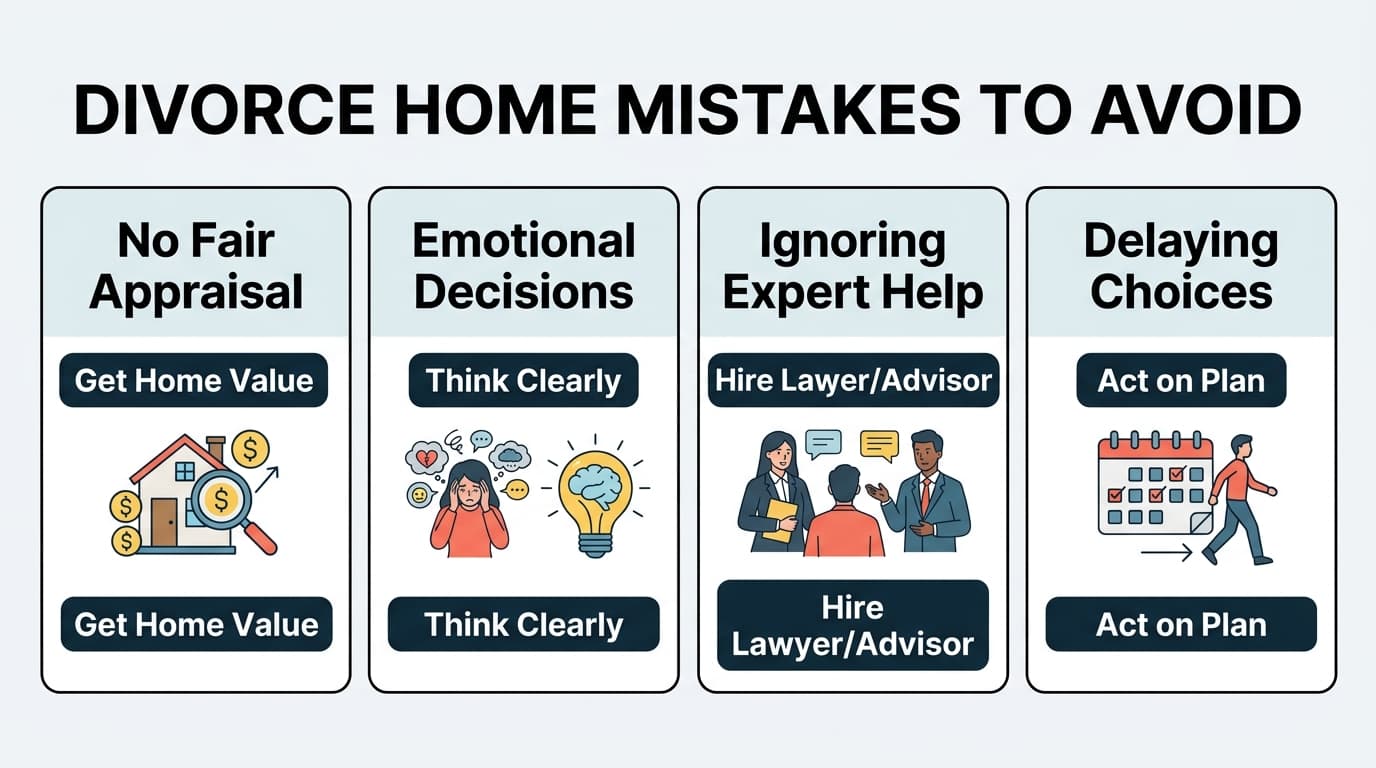
Common divorce home mistakes to avoid such as no appraisal, emotional decisions, and delaying choices.
One major mistake is not getting a fair home appraisal. You need to know your home's true value. Relying on an old estimate or online guess can cost you. For example, if you think your home is worth $300,000, but it's really worth $350,000, one spouse might get less than they deserve. This leads to an unfair split of assets.
Another big error is making fast, emotional choices. Divorce is tough. Yet, selling your house too quickly without thought can harm your finances. For instance, just wanting to "get out" might make you accept a low offer. This affects your future financial health. Taking advice from a legal professional or financial advisor can keep you from making these costly mistakes. HouseGoodbye.com helps homeowners sell their house fast and for cash, even during tough times like divorce.
- Don't rely on guesses. Get a formal home appraisal to know its true worth.
- Avoid hasty decisions. Emotional choices often lead to bad financial results.
- Seek expert advice. Talk to lawyers or financial pros early on.
What Property is Untouchable in a Divorce?
Not all things you own will be divided in a divorce. Not all things you own will be divided if you get divorced. Some assets are yours alone. These are called "separate property." Separate property is generally safe from being split. Separate property often includes:- Property owned before marriage: Any home, car, or bank account you had before you married.
- Gifts to only one spouse: A gift given just to you, not to both of you as a couple.
- Inheritances: Money or property you received because someone passed away.
- Certain lawsuit payments: Money you received from a personal injury lawsuit, for example.
How Long Does It Take to Force the Sale of Property?
Forcing a home sale through court during a divorce can take a lot of time. Getting a court order to sell your house is not a quick process. The time it takes can change a lot. It depends on how busy the court is and the laws in your state. How much your spouse cooperates also plays a big role. This can add many months to your divorce timeline. Here is a common timeline for a court-ordered house sale:- Legal Steps: This includes filing motions and court hearings. It can take 2 to 6 months just for the judge to order the sale.
- Appraisals and Listing: After the court order, you need property appraisals. Then the house gets listed for sale. This step can take 1 to 3 months.
- Selling Period: Finding a buyer and getting an offer generally takes 1 to 4 months. This depends on the housing market. Learn more about selling a house fast.
- Closing: Once you have a buyer, closing the sale usually takes 1 to 2 months.
The HouseGoodbye.com Solution: Selling Your Home Stress-Free
When you need to sell your house quickly and easily during a divorce, HouseGoodbye.com offers a helpful path forward. Divorce can be tough. Selling your shared home can add more stress. HouseGoodbye.com helps you avoid the usual headaches of selling a house. We give you a fair cash offer fast. We buy houses in any condition. This means no repairs or renovations for you. You won't deal with open houses or many showings. We make the process simple and quick. Our team offers a compassionate approach. We understand your need for a smooth transition. When you work with us, you can swiftly move forward to your next chapter. Learn more about how we help sell your house fast for cash at HouseGoodbye.com. Here’s how we make selling your home easier:- Fast Cash Offers: Get a fair offer for your house quickly.
- No Repairs Needed: Sell your home as-is. Do not worry about fixing anything.
- Quick Closing: We can close in as little as 7-14 days. This helps you get your money sooner.
- Simple Process: Avoid the stress of traditional home sales. You will not need to deal with real estate agents.