Key Takeaways: Selling Your House As Is
Selling your house “as is” offers a faster, simpler sale.
Here are the main points when you sell your house as is:
- No Repairs: You do not have to fix anything. This saves you stress and money.
- Faster Sale: Selling “as is” often means a quicker closing. This is great if you need to sell fast. People selling an inherited house find this helpful.
- Lower Price: Expect a lower offer for your home. Buyers plan for the cost of repairs.
- Cash Buyers: You will likely attract cash buyers or investors. They often want homes they can update.
- Tell All: You still must tell buyers about known problems. “As is” doesn’t mean hiding issues. You can learn more from the U.S. government’s guide on buying and selling a home.
- Less Hassle: Avoid many showings. This makes the selling process much smoother.
What Does ‘Selling a House As Is’ Really Mean?
Selling a house “as is” means you sell your home exactly as it is now.
When you sell your house as is, you offer it in its current state. This means you will not make any repairs before selling. This includes big fixes, like a leaky roof. It also means no small jobs, like painting a room. The buyer accepts the house with all its problems.
A special “as is” clause is usually in the sales contract. This clause tells buyers you will not do repairs after their inspection. It clearly states that the house is sold with all its flaws. For example, if the furnace is old, you expect the buyer to handle repairs themselves. This gives you peace of mind and saves you time.
Even when selling “as is,” you still need to tell buyers about known problems. This is called proper disclosure. For instance, if your basement floods every spring, you must tell buyers. Hiding major issues can lead to legal problems later. You simply won’t fix those issues yourself.
Selling “as is” is different from a typical sale. In a regular sale, buyers often ask for repairs after an inspection. With an “as is” sale, buyers know upfront that you will not fix anything. This makes the sale process simpler for you. The U.S. government provides useful resources for homeowners.
For many homeowners, this option is ideal. It helps them avoid the costs and work of home repairs. You can sell your house without spending thousands on updates. Imagine saving $15,000 on a kitchen remodel you won’t use. You can also sell your home quickly this way, which is often a big benefit. This is one reason why many people choose to sell a house without a realtor.
Key Takeaways
- You sell your house in its current shape, with no repairs.
- The “as is” clause means you won’t fix anything after inspection.
- You must still tell buyers about known problems.
Pros of Selling a House As Is: Embrace Speed and Simplicity
Flowchart comparing the simplified steps of selling a house as is versus the many steps of a traditional home sale.
Selling your house as is saves you time, cuts costs, and reduces stress.
Selling a house as is means you sell it in its present condition. You make no repairs or updates before the sale. This method offers several big benefits, especially if you need to sell fast.
1. Save Valuable Time
When you sell a house as is, you do not need to do repairs. This means no waiting for contractors. For example, if your roof needs replacing, fixing it could take weeks. Selling as is avoids this delay. You can put your house on the market right away.
Consider these time savings:
- No repair quotes: You do not have to call contractors.
- Zero renovation time: You save weeks or months of work.
- Faster listing: Your house can be ready to sell sooner.
This is a huge plus for people who need to move quickly. Maybe you accepted a new job in another state. Perhaps you got an inherited home from a family member. Every day saved helps you move forward. You can learn more about how we help with selling an inherited house.
2. Avoid Costly Repairs
Fixing up a house costs money. Even small updates can add up. A new kitchen could cost $25,000 to $50,000. A new furnace might cost $5,000. Selling as is lets you keep your cash. You do not spend money on repairs that a buyer might change anyway.
Consider these avoided costs:
- Materials: Paint, flooring, new appliances.
- Labor: Paying contractors, plumbers, electricians.
- Unexpected issues: Finding more problems once work starts.
You will likely get a lower sale price for an as-is home. Yet, you avoid spending thousands on fixes. This can be better for your budget. The money you save on repairs can sometimes make up for a lower sale price.
3. Reduce Stress and Effort
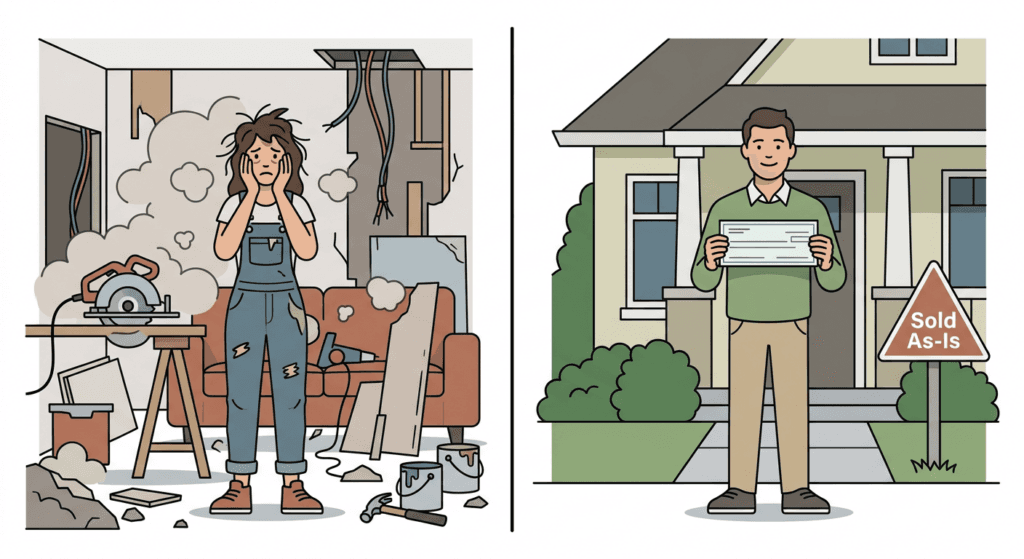
Managing repairs is often stressful. You have to find good contractors. You must check their work and deal with delays. Selling as is removes this problem. You do not have to watch over projects. You don’t deal with construction mess. This is a big relief for busy people.
Think about the effort you save:
- No project management: You do not need to coordinate workers.
- No daily disturbances: Your home stays calm.
- Less emotional drain: Selling a home can be tough. Avoiding repairs helps reduce that stress.
For example, homeowners going through a divorce often want to avoid extra stress. Selling as is makes the process simple. You can hand off the house as it is. Then you can focus on what’s next.
4. Get a Faster Sale
Many buyers are looking for a deal. They want a house they can fix up. These buyers, often investors, want to close quickly. An as-is sale appeals to them. They know what they are getting. They are ready to take on the work.
This means:
- Quicker offers: Buyers who accept “as is” terms often make offers fast.
- Faster closing times: Cash buyers do not rely on bank loans. This speeds things up. Our service, HouseGoodbye.com, connects you with buyers ready to close quickly for cash.
- Fewer negotiations: The price already reflects the home’s condition. There is less back-and-forth about repair costs.
Traditional home sales can take 30 to 45 days to close after an offer. Selling as-is to a cash buyer can cut this time a lot. Sometimes it closes in as little as 7-14 days. This speed is vital for urgent needs. Think about avoiding foreclosure or moving for a job.
Cons of Selling a House As Is: Understanding the Trade-offs
Selling your house as is usually means a lower sale price. This is because buyers account for future repair costs.
When you sell a home “as is,” you will not do any repairs before the sale. This saves you time and effort. But it also comes with some downsides. Knowing these can help you decide if an “as is” sale is right for you.
Lower Sale Price
Bar chart illustrating the financial comparison of selling a $300,000 home: market value, value after repairs, and as-is sale price, including repair cost deductions.
The biggest downside is usually a lower sale price. Buyers will expect a discount. They are taking on the repair work. For example, a similar house in good shape might sell for $250,000. Your “as is” home might sell for $200,000 to $220,000. This $30,000 to $50,000 difference covers the buyer’s cost and risk of repairs.
Homes sold “as-is” often sell for 10% to 20% less. This is compared to homes in good condition. This difference can be even more if the house needs major fixes. You are trading convenience for less money.
Smaller Buyer Pool
Many home buyers want a house they can move into right away. An “as is” house often needs work. This scares off many buyers. This means fewer people will be interested in your home. You might miss out on offers from families or first-time buyers. They might not have extra money for repairs.
This smaller group of buyers can make your home sit on the market longer. For example, a ready-to-move-in home might sell in 30 days. An “as-is” home could take 60 days or more. You can reduce this time by working with cash buyers. Find out more about how we help sell homes quickly at HouseGoodbye.com.
Buyer Financing Hurdles
It can be harder for buyers of “as-is” homes to get a loan. Most lenders want a detailed home appraisal. This makes sure the house meets certain safety and living standards.
If your “as is” home has major issues (e.g. a broken roof or bad plumbing), a lender might not approve the loan. They see it as too risky. This means you might only be able to sell to cash buyers. The Federal Housing Administration (FHA) has strict rules for the condition of homes it will finance. You can learn more about FHA loan requirements on the HUD website.
Continued Negotiation
Even with an “as is” clause, buyers might still try to negotiate. After their inspection, they could ask for a lower price. They might point out new issues they found. This can be annoying because you chose “as is” to avoid these talks. Be ready for some back-and-forth, even if you are firm on your price.
For example, a buyer might find a $10,000 foundation issue. They then ask you to drop the price by that amount. This is common in real estate deals.
Longer Time on Market (Potentially)
If your price is too high for the condition, your home could sit for a while. Buyers looking for a fixer-upper expect a good deal. If they don’t see value, they will skip your listing. This can cause you to lower the price multiple times. Each price drop can feel like another loss.
To avoid this, price your “as is” home correctly from the start. Look at similar “as is” sales in your area. This helps you set a fair price. Knowing the market can help reduce how long your house sits unsold. We help homeowners achieve a fast sale at HouseGoodbye.com.
How Much Do You Lose When Selling a House As Is?
The amount you lose when selling a house as is varies.
This depends on your home’s condition and the local market. Selling a home “as is” often means accepting a lower price. Buyers will plan for the cost of needed repairs.
For homes needing many major fixes, you might sell for 10% to 20% less than market value. A home valued at $300,000 might sell for $240,000 to $270,000. For smaller issues, the price drop could be around 5%. A $300,000 home might go for $285,000.
The “Loss” is Often a Trade-Off
Think of this “loss” as a trade-off. You save money, time, and stress by not doing repairs. You avoid contractors, inspections, and delays. This can be a huge benefit for busy people.
Consider these examples:
Selling “As Is”: You sell a $300,000 home that needs $30,000 in repairs for $270,000.
- No repair costs: $0
- No agent fees (if selling to a cash buyer like HouseGoodbye): You save about 6% of $270,000 ($16,200).
- Total cash in your pocket: $270,000 + $16,200 = $286,200 (before other small closing costs).
Selling After Repairs: You spend $30,000 to repair your home. Then you list it for $300,000.
- Repair costs: -$30,000
- Agent fees: -$18,000 (6% of $300,000)
- Total cash in your pocket: $300,000 – $30,000 – $18,000 = $252,000 (before other small closing costs).
In this example, selling “as is” could actually leave you with more cash. It also avoids the hassle of managing repairs. You can also save on selling a house without a realtor by selling directly to an investment group.
The actual cash in your hand matters most. Many sellers find peace of mind worth the difference. It means avoiding headaches and moving on faster. For more details on what selling “as is” means, check out our guide on what HouseGoodbye is.
The U.S. Department of Housing and Urban Development (HUD) notes that an “as-is” sale is common for homes needing major repairs. This means you will not make any changes to the home before closing. HUD’s official site provides details on buying properties as-is. This helps explain the seller’s point of view too.
Is It Better to Fix a House Up or Sell As Is?
Choosing to fix your house or sell as is depends on your situation.
Deciding whether to fix up your house or sell it as-is is a big choice. Think about your available time, your money, and what you want. There are pros and cons to both ways. What works for one person might not work for another.
Fixing up your house can lead to a higher sale price. When buyers see a move-in-ready home, they often pay more. However, this path costs you time, money, and can be stressful. You might need to hire contractors. You might have to pick out new materials. And you could deal with unexpected problems. A full kitchen remodel, for example, can cost $20,000 to $60,000. These costs cut into your profit.
Selling your house as is offers a quicker, simpler path. You avoid repairs, showings, and waiting for buyers to get loans. This means less hassle and more certainty. The trade-off is often a lower sale price. Buyers expect a discount for taking on repairs themselves. They might offer 10% to 20% less than a fully updated home.
For major life changes like a divorce or a job move, selling as-is is often the better, faster choice. It removes a huge burden during an already tough time. You get cash quickly and can move on. HouseGoodbye.com helps homeowners sell fast and avoid repairs. They get buyers to compete for your house fast.
Consider these points to help you decide:
- Your Time: Do you have weeks or months to manage repairs and a traditional sale?
- Your Money: Can you afford repair costs upfront without causing financial problems?
- Your Stress: Are you ready to deal with contractors, inspections, and buyer talks?
- Your Goal: Do you need the absolute highest price? Or do you need a fast, easy sale?
Sometimes, small, important repairs might be worth it. Fresh paint, fixing a leaky faucet, or updating light fixtures can make a big difference for little cost. For example, a $500 paint job might add $3,000 to your home’s appeal. Major renovations, like adding a bathroom, often are not. The average return on investment for a bathroom remodel is about 60% if you sell soon after. This means you might spend $15,000 but only get $9,000 back.
Most major home repairs will cost you more than you get back when you sell. The National Association of Home Builders (NAHB) often reports on remodel costs. If you are not looking to stay in the home for years, big projects rarely pay off. It is rarely smart to spend large sums of money on fixes before moving out.
Is It Wise to Sell a House As Is?
Selling a house as is can be a wise choice for many sellers. This is true if you need to sell quickly or avoid repairs.
Selling a house as is means you sell it in its current condition. You don’t make any repairs or updates. This approach is often smart for people in certain life situations. It can save you time, money, and stress.
Here are some times when selling a house as is is a wise decision:
- You need to sell fast: Life changes like a new job, divorce, or money problems mean you need to sell quickly. Making repairs takes time. Selling as is speeds up the process. This can be key when moving quickly.
- You lack funds for repairs: Fixing up a house can cost thousands of dollars. For example, a new roof might cost $15,000. If you don’t have this cash, selling as is avoids the expense. Buyers who want to fix up a home often pay cash.
- Your house needs major work: If your home needs more than small fixes, selling as is makes sense. Dealing with big repairs like a new foundation or plumbing is stressful. Selling as is avoids those headaches. Cash buyers often take on these projects. This is good if you have a house in disrepair.
- You live far away from the property: Managing repairs from a distance is hard. Many people sell an inherited house this way. Selling as is means you don’t have to travel back and forth. You can sell your house without a realtor.
- You are downsizing or relocating: When you move to a smaller place or a new city, you want a simple sale. Selling as is keeps things easy. This lets you focus on your move, not on home repairs.
- You are dealing with probate: Selling an inherited house through probate is already complex. Selling it as is simplifies the process. It helps you close the estate faster.
For many homeowners, selling as is removes a huge burden. It lets you move forward without the stress of fixes and showings. To learn more about how this works, check out HouseGoodbye.com– Get buyers to compete for your house fast. You can also find state-specific information from trusted sources like the U.S. government housing resources.
Understanding the ‘As-Is’ Clause and Disclosure Laws
An ‘as-is’ clause means the buyer accepts the home in its current state.
When you sell a house as is, you’re telling buyers you won’t do repairs. This means they agree to buy the home with any problems it might have. This clause protects you from future requests for fixes after a home inspection. For example, if the buyer finds a leaky faucet, they can’t ask you to fix it.
However, an “as-is” sale does not mean you can hide problems. You must tell buyers about any known issues. These are called “material defects.” A material defect is a problem that greatly affects the home’s value or safety. Think about a cracked foundation or a roof that leaks. If you know about these issues, you must share them.
Trying to hide these known problems can lead to big legal troubles. Even with an “as-is” agreement, you could face lawsuits. A buyer might sue you for not telling them about a mold problem you knew existed. Always be honest about your home’s condition.
Disclosure laws change from state to state. Some states require you to fill out a detailed form about your home. Other states have fewer rules. It’s smart to know the exact rules where your house is located. For instance, in Michigan, sellers typically complete a Seller Disclosure Statement. This lists many features and defects of the property.
You can find out more about what you need to tell by checking your state’s real estate commission rules. You can also speak with a local real estate attorney. This will help you avoid legal problems later. We always recommend understanding local rules for a smooth sale. If you’re looking to sell quickly in Michigan, learn more about how we buy houses for cash in Holland, Michigan.
USA.gov offers helpful resources on housing and property laws. No matter the condition of your home, honesty is the best policy. It builds trust and makes the selling process easier for everyone.
Selling a House As Is With a Realtor vs. Selling for Cash
Venn diagram comparing the pros and cons of selling a house as is with a realtor versus selling as is to a cash buyer.
You can sell a house as is with a realtor or directly to a cash buyer. Each way has its own benefits and drawbacks. Knowing these differences helps you pick the best path for your situation.
Selling As Is with a Realtor
A realtor helps you reach more buyers. They list your home on many websites. This could lead to a slightly higher offer than a direct cash sale. Real estate agents also handle showings and talks. They guide you through the closing process.
However, selling with a realtor takes time. You might have many showings. Buyers may still ask for repairs, even if you list “as is.” Plus, you pay agent fees. These fees can be 5% to 6% of the sale price. On a $200,000 home, that’s $10,000 to $12,000. For example, if you sell your home for $200,000 with a 6% agent fee, you pay $12,000. You also pay other closing costs.
Selling As Is for Cash
Selling directly to a cash buyer, like HouseGoodbye.com, offers speed and ease. Cash buyers buy homes in any condition. You don’t need to make repairs. This saves you money and stress. You also avoid agent fees.
Cash deals close much faster. Many close within 7-14 days. You can often pick your closing date. This is great if you need to sell quickly. For example, if you need to move in two weeks, a cash sale can make that happen. No showings are needed. This avoids disruptions to your life. The process is simple, and you get a fair cash offer.
Comparison Table
| Feature | Selling with a Realtor | Selling for Cash |
|---|---|---|
| Speed | Can take weeks or months | Fast, often 7-14 days |
| Repairs | Buyers may still ask for some repairs | No repairs needed from you |
| Fees | You pay agent commissions (5-6%) | No agent fees |
| Showings | Multiple showings may be required | Usually one visit, no open houses |
| Offer | Potentially slightly higher price | Fair cash offer, less negotiation |
| Complexity | More paperwork, buyer finance delays | Simple process, quick closing |
Deciding between a realtor or a cash buyer depends on what you need. If speed and ease are most important, a cash sale makes sense. If you want to try for the highest possible price and have time, a realtor might be better. You can learn more about selling a house without a realtor on our blog. The Federal Trade Commission offers helpful advice on buying and selling a home.
Can You Sell a House As Is Without Inspection?
Selling a house as is often involves an inspection, even if the seller doesn’t do repairs.
You might wonder if you can sell your home “as is” without any inspections. The short answer is usually no. Even when selling a house as is, inspections are a normal part of the process.
Why Inspections Still Happen
- Buyer’s Peace of Mind: Most buyers want to know what they are buying. An inspection helps them understand the home’s condition. This lets them plan for future costs.
- Lender Requirements: If a buyer needs a loan, their bank will likely demand an appraisal and sometimes an inspection. Banks want to protect their money. For example, if a major system like the roof or plumbing is in very bad shape, a lender might not approve the loan.
- Seller’s Advantage: You can get your own inspection before listing your house. This is called a pre-listing inspection. It helps you find big problems early. Then you can choose to fix them, or tell buyers about them upfront. This avoids surprises later. Knowing what issues exist can help you price your home correctly. You can learn more about reliable inspectors from organizations like the International Association of Certified Home Inspectors.
The “As Is” Clause and Inspections
An “as is” sale means you will not make repairs. It does not mean the buyer cannot inspect the home. It means you will not pay for fixes based on what the inspection finds. Buyers can still back out of the sale if the inspection uncovers big problems. This is often part of their contract.
It is always best to be open and honest about a home’s condition. Telling about known issues and allowing inspections builds trust. This can lead to a smoother, faster sale. If you want to sell a house without a realtor, understanding inspection roles is even more important.
What Devalues a House the Most?
Several factors can greatly devalue a house. These often become problems for ‘as-is’ sellers. Buyers will offer less for homes with these issues. Knowing this helps you understand their lower cash offers.
Here are major issues that cut a home’s value:
Serious Structural Problems
- Foundation issues: Cracks in the foundation cost a lot to fix. Experts say these repairs can be over $10,000.
- Roof damage: A leaky or old roof needs quick replacement. A new roof can cost $8,000 to $15,000 or more.
Outdated Interior Features
- Old kitchens and bathrooms: These rooms are key to home value. Old fixtures and worn-out cabinets make a house look dated. A full kitchen remodel often starts around $25,000.
- Old flooring: Stained carpets or broken tiles show neglect.
Deferred Maintenance
This means putting off needed repairs.
- Bad plumbing or electrical systems: These are not just old; they can be unsafe. Fixing them can be very expensive.
- Broken HVAC (heating and cooling): Replacing an entire system can cost $7,000 or more.
Poor Curb Appeal
The first impression matters.
- Overgrown yard: Messy landscaping makes a home less pleasing.
- Peeling paint: This shows a lack of care and suggests more issues inside.
Unpleasant Odors
Smells from pets, smoke, or mold are hard to remove. They immediately turn buyers away.
Problematic Location
Some things you cannot change.
- Being too close to a noisy road or a factory.
- Living in a high-crime area.
These factors explain why selling a house as is often means a lower sale price. Buyers plan for these repair costs. Learn more about selling a house in disrepair. For example, homes sold ‘as-is’ may sell for 10% to 20% less than updated homes. This happens because buyers must spend their own money and time on fixes. For major issues like a bad foundation, offers can drop a lot. The U.S. Department of Housing and Urban Development (HUD) notes that homes needing major work sell for less.
When Are the Worst Months for Selling a House?
Certain months are slower for home sales. But ‘as-is’ properties can still sell.
Selling a house usually slows down in winter. Fewer people look to buy a home from about November to February. This is because of cold weather and holiday plans. Families are often busy during these months.
However, if you’re selling your house as is to a cash buyer, these trends matter less. Cash buyers often look for good deals all year. They don’t mind cold weather or holidays as much. They can close fast. This avoids typical market delays.
For example, a traditional sale might take 60 days in spring but 90 days in winter. An “as is” cash sale could still close in 7-14 days. These buyers want a quick process, no matter the season. Selling this way can help you avoid market slowdowns. To learn more, check out government housing resources.
Conclusion: Making the Right Choice for Your Situation
Selling a house as is is a powerful option for speed and convenience.
Choosing to sell your house “as is” might seem like you are giving up money. But it is really about valuing your time and peace of mind. For many, avoiding repairs and costly delays is worth more. This route helps you move forward faster with your life plans.
If you are going through a tough time, an “as-is” sale can be a real help. This includes events like a divorce, a job move, or inheriting a property. It removes the stress of fixing up a house when you have other worries. It speeds up your timeline.
HouseGoodbye.comoffers a clear, fast, and fair process for real “as-is” sales. We connect you with buyers who compete for your home. You get a firm cash offer quickly. This means no showings, no repairs, and no agent fees. Find out more about how we help homeowners sell a house without a realtor.
Do not let property repairs hold you back. Reach out to HouseGoodbye.com today. Explore your options and get a no-obligation cash offer. You might be surprised at how easy selling your home can be.
Frequently Asked Questions
Quick answers to the questions people ask most.
Is it better to fix a house up or sell as is?
It depends on your time, money, and what you want. Fixing up can get a higher price but takes effort and cash. Selling as is is faster and easier. However, it usually leads to a lower offer. When you compare repair costs and time, an ‘as-is’ sale often makes good financial sense. This is true for those who need to move quickly or avoid repair stress.
How much do you lose when selling a house as is?
The ‘loss’ varies a lot. It is often 5-20% less than a perfectly fixed home, depending on needed repairs. This ‘loss’ is offset by saving thousands on repairs, agent fees, and the costs of owning the house longer. It’s a trade-off for speed and ease.
Is it wise to sell a house as is?
Yes, it is wise for many sellers. This is especially true for those facing big life changes (divorce, inherited property, moving). It’s also good for those with money problems. If you want speed, ease, and to avoid repair stress, selling ‘as is’ is a wise choice. It is often a smart financial decision.
What devalues a house the most?
Major issues like foundation problems, a leaky roof, old or broken kitchens/bathrooms, and many deferred repairs (e.g., broken heating, plumbing issues) devalue a house the most. Bad location and poor curb appeal also greatly lower value. These are exactly the problems ‘as-is’ cash buyers are ready to take on.
Can you sell a house as-is without inspection?
You can offer a house ‘as is’. But buyers (especially those getting a loan) will almost always get an inspection. The ‘as-is’ clause means you won’t make repairs based on it. However, the buyer still can inspect. They might take back their offer if problems are too big for them. It’s smart for sellers to get their own inspection before listing. This helps them know exactly what problems exist.
What are the worst months for selling a house?
Usually, the market slows down in late fall and winter, especially around holidays. But for ‘as-is’ properties bought by cash buyers, the season matters less. Cash home buyers are often busy all year. They look for deals no matter the traditional selling season. This makes a quick sale possible any time.