
TL;DR:
- Texas sellers can choose among local investors, national iBuyers, franchise cash buyers, and wholesalers, each with different trade-offs. Housegoodbye offers competitive bids from multiple investors, helping sellers maximize proceeds without repairs or agent fees.
- Understanding contract risks and verifying buyer legitimacy are essential to protect your equity when selling quickly in Texas.
What are the top alternatives to offer.diamondacquisitions.biz?
If you’re looking at offer.diamondacquisitions.biz alternatives, the short answer is this: your real options in Texas fall into four categories — local direct investors (like Diamond Acquisitions itself), national iBuyers (Opendoor, Offerpad), franchise cash buyers (HomeVestors), and wholesalers. Each trades price for speed differently, and the gaps between them can run into tens of thousands of dollars.
The comparison below covers the five most relevant options for Texas homeowners who need a fast, as-is sale.
| Buyer | Type | Offer Range (% FMV) | Closing Timeline | Fees | Coverage | Best For |
|---|---|---|---|---|---|---|
| Diamond Acquisitions | Local direct investor | 50–70% | — | None explicit | Texas (local) | Sellers wanting direct local contact |
| HomeVestors | National franchise | 50–70% | 7–30 days | None explicit | Nationwide/Texas | Brand-name franchise with local operators |
| Opendoor | iBuyer | 70–80% | 7–30 days | ~5% service + ~1% closing | Major Texas metros | Sellers wanting tech-driven convenience |
| Offerpad | iBuyer | 70–80% | 8–90 days (flexible) | ~5% service + ~1% closing | Major Texas metros | Sellers wanting flexible closing dates |
| HomeVestors (We Buy Ugly Houses) | National franchise | 50–70% | 7–30 days | None explicit | Nationwide/Texas | Distressed property sellers |
Key considerations before you sign anything:
- Verify proof of funds from any buyer before accepting an offer.
- Check for “and/or assigns” language in the contract, which signals a wholesaler, not a direct buyer.
- Confirm BBB accreditation status. Diamond Acquisitions holds a BBB profile in Texas.
- Ask whether the buyer uses inspection contingencies that let them renegotiate or exit after signing.
- iBuyers charge roughly 5% in service fees on top of a lower purchase price, so compare net proceeds, not just the headline offer.
- Closing timelines vary widely. A “7-day close” promise means little if the contract contains partner approval clauses.
Pro Tip: Get at least two written offers before committing. Even a single competing bid shifts negotiating leverage in your favor.
Diamond Acquisitions vs. HomeVestors: what the franchise model actually means for you
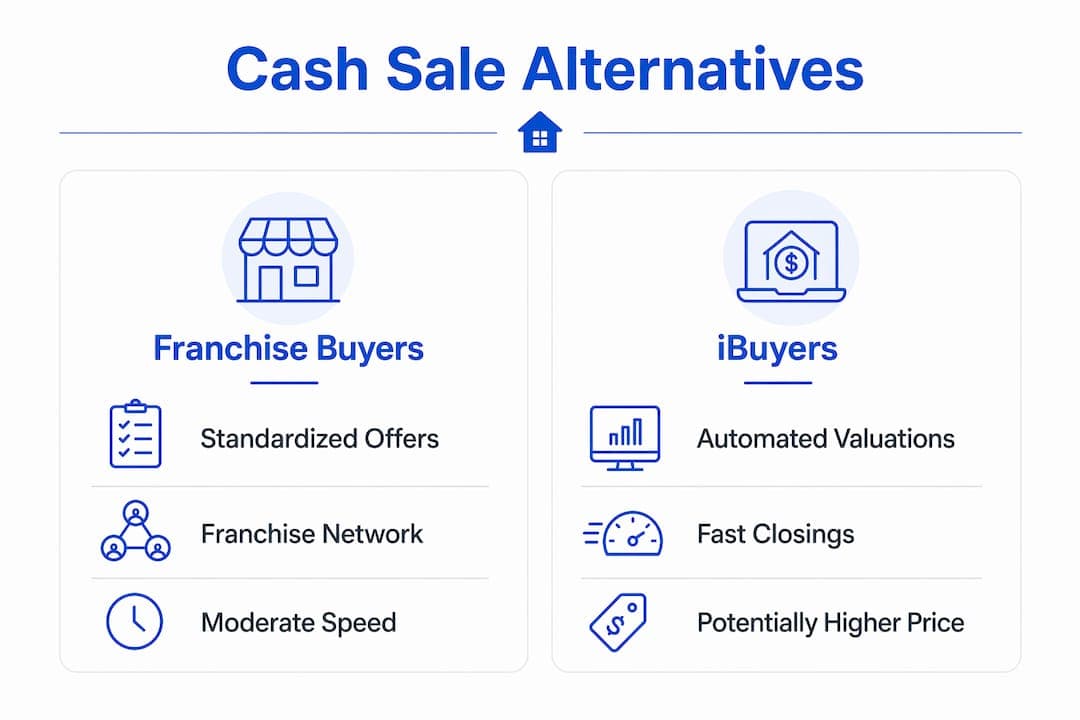
The most direct comparison for Texas sellers is Diamond Acquisitions versus HomeVestors, because both operate in the same price tier and both buy as-is. The difference is structural.
HomeVestors runs a franchise network of 900+ local operators across the country. When you call the HomeVestors number, you’re routed to a franchisee in your area, not a corporate buyer. That franchisee sets their own offer, follows their own timeline, and carries the HomeVestors brand name. Diamond Acquisitions, by contrast, is a single Texas operator. You deal with one person or team from first contact to closing.
Why does that matter? With a franchise, the brand recognition is real, but the experience varies by location. One HomeVestors franchisee in Houston might be excellent; another in San Antonio might move slowly or offer less. Diamond Acquisitions’ single-operator structure means more consistent communication and direct local market knowledge, but also less capacity if your situation is complex.
Key contrasts between the two models:
- Diamond Acquisitions: single Texas operator, direct communication, local market familiarity.
- HomeVestors: a national franchise network, brand recognition, but variable seller experience by location.
- Both typically offer a range of fair market value with no explicit fees.
- Both buy properties as-is, including distressed homes.
- Closing timelines for both generally fall within a range of days, depending on the franchisee or operator.
- BBB accreditation varies by individual HomeVestors franchisee. Diamond Acquisitions maintains a BBB profile in Texas.
For sellers who want a known national name and don’t mind some variability in who they actually work with, HomeVestors is a reasonable choice. If you want to know exactly who you’re dealing with from day one, a single-operator like Diamond Acquisitions removes that uncertainty.
Stat to know: HomeVestors operates through 900+ local franchisees nationwide, meaning your actual buyer is a local business owner, not a corporate entity.
How iBuyers like Opendoor and Offerpad compare to Diamond Acquisitions
iBuyers are a genuinely different animal. Opendoor and Offerpad use automated valuation models to generate offers online, often within 24–48 hours. The process is clean, the interface is modern, and the fees are disclosed upfront. But the math works out differently than it first appears.

National iBuyers charge approximately 5% in service fees plus around 1% in closing costs. Their offers typically land at 70–80% of fair market value, which is higher than most direct investors. But once you subtract fees, the net proceeds often end up closer to what a direct investor pays, without the fee line item. The difference is that iBuyers tend to buy homes in better condition. If your property is distressed or needs significant work, Opendoor and Offerpad may decline entirely or adjust the offer sharply downward after inspection.
What to weigh when comparing iBuyers to Diamond Acquisitions:
- Opendoor and Offerpad operate primarily in major Texas metros (Dallas, Houston, Austin, San Antonio). Rural or smaller-market Texas sellers may not qualify.
- iBuyer offers are generated algorithmically. Diamond Acquisitions’ offers come from a local operator who has physically evaluated your market.
- iBuyers disclose their fees clearly, which makes net-proceeds math easier to verify.
- Both Opendoor and Offerpad include inspection periods. Offers can be revised downward after inspection, a risk sellers sometimes overlook.
- Offerpad offers more flexible closing timelines, ranging from 8 to 90 days, which suits sellers who need to coordinate a move.
- Diamond Acquisitions typically closes faster on distressed properties where iBuyers would hesitate.
The honest read: if your home is in decent shape and you’re in a major Texas city, iBuyers give you a higher headline number with transparent fees. If your property has deferred maintenance or you’re outside a metro, a local direct investor is more likely to actually close.
Wholesalers and franchise buyers: the contract risks Diamond Acquisitions sellers should understand
Not every “cash buyer” who contacts you actually has cash. Wholesalers are the category most likely to cause problems, and they’re common in Texas.
A wholesaler signs a purchase contract with you, then sells that contract to an actual investor before closing. The clause that signals this is “and/or assigns” language in the contract. Once a wholesaler assigns your contract, the new buyer may renegotiate the price, extend the timeline, or walk away entirely. You’ve lost weeks and may be back at square one.
Contract risks to watch for with wholesalers:
- “And/or assigns” clauses that allow the buyer to transfer the contract to a third party.
- Minimal earnest money deposits, sometimes as low as a few hundred dollars, giving the buyer little financial skin in the game.
- Broad inspection contingencies that let the buyer exit for nearly any reason.
- No clear contract expiration date, leaving you in limbo.
- Partner approval clauses that create delays even after you’ve signed.
Franchise buyers like HomeVestors operate differently. They use standardized contracts, and because the franchisee is actually purchasing the property, there’s no assignment risk in the typical deal. Diamond Acquisitions, as a direct buyer, also eliminates the assignment layer. The trade-off is that both franchise and direct buyers offer in the 50–70% FMV range, which is where wholesalers also tend to land, but with more deal certainty.
A legitimate cash buyer puts down around 3% earnest money and can close in 7–14 days without extensive contingencies. If a buyer is offering minimal earnest money and wants an assignable contract, treat that as a red flag regardless of what they call themselves.
Pro Tip: Always ask for written proof of funds before signing. A real buyer can produce a bank statement or letter from their lender within 24 hours. Hesitation on this point tells you everything.
Diamond Acquisitions vs. listing with a real estate agent
Speed versus price. That’s the core trade-off, and it’s worth being specific about the numbers.
Listing with a licensed real estate agent in Texas typically yields 76–84% of market value, even for homes that need work. Cash offers from direct investors and franchise buyers generally land at 50–70% of the same value. On a $300,000 home, that gap can be $60,000 or more before you account for agent commissions. Agents typically charge 5–6% of the sale price, which narrows the gap but doesn’t close it.
Advantages of listing with an agent:
- Higher net proceeds in most cases, even after commissions.
- Access to owner-occupant buyers who pay more than investors.
- A fiduciary duty: the agent is legally required to act in your financial interest.
- Exposure to the full market, including buyers who will pay a premium for a home they plan to live in.
Advantages of selling directly to a cash buyer like Diamond Acquisitions:
- No repairs, staging, or showings required.
- Closing in days, not months.
- No agent commission.
- Certainty of close, assuming the buyer is legitimate and has funds.
- Useful for sellers facing foreclosure, divorce, estate situations, or urgent relocation.
The honest calculus: if you have 30–60 days and your home is in reasonable condition, selling as-is on the open market almost always nets more money. If you need out in two weeks and can’t or won’t make repairs, a cash buyer is the right tool. The mistake is treating these as equivalent options when they serve very different situations.
How to choose the best cash home buyer alternative in Texas
The right choice depends on three things: how fast you need to close, how much equity you can afford to leave on the table, and how much contract risk you’re willing to accept.
Start with your timeline. If you need to close in under two weeks, iBuyers are often too slow for distressed properties, and listing with an agent is off the table. Direct investors and franchise buyers are your realistic options. If you have 30–60 days, the field opens up considerably.
Questions to ask every potential buyer before signing:
- Can you provide written proof of funds today?
- Does this contract contain an “and/or assigns” clause?
- What is the earnest money deposit, and is it refundable?
- Are there inspection contingencies, and what triggers them?
- What is your actual closing timeline, not your best-case scenario?
- Are you the end buyer, or will this contract be assigned?
- Do you have BBB accreditation or verifiable references from recent Texas transactions?
Factors that should drive your final decision:
- Offer price relative to your home’s actual market value, not just the headline number.
- Net proceeds after fees, commissions, and concessions.
- Contract transparency: can you read and understand every clause before signing?
- Geographic coverage: does this buyer actually operate in your county?
- Communication quality: are they responsive, or do you wait days for a callback?
The equity gap is real. Accepting a 55% FMV offer when a 30-day listing would net 78% costs you money. But if foreclosure is 10 days away, that math changes completely. Know your situation before you evaluate the offer.
Pro Tip: Check the BBB profile for any buyer you’re seriously considering. Look for complaint patterns, not just the rating. A buyer with an A+ rating and three unresolved complaints tells a different story than the letter grade alone.
The true cost of selling as-is for cash in Texas
The equity gap is the number most sellers don’t calculate until after closing. It’s the difference between what a cash buyer pays and what your home could realistically sell for on the open market, and it can run into the tens of thousands of dollars even on a modest Texas property.
Cash offers from direct investors and franchise buyers typically land at 50–70% of fair market value. iBuyers offer closer to 70–80%, but their service fees of roughly 5% plus closing costs compress the net figure. Listing with an agent yields 76–84% even for homes needing work, minus the 5–6% commission. Run those numbers on your specific home before you decide.
Beyond the price gap, contract risks compound the cost. A “we buy houses” contract may include inspection contingencies and partner approval clauses that let buyers delay or exit after you’ve already taken the home off the market. You’ve lost time, and you’re back to square one with fewer options.
Precautions before signing any cash sale contract:
- Get an independent market analysis from a licensed Texas agent so you know your baseline.
- Read every contingency clause. If you don’t understand it, have a real estate attorney review it.
- Confirm earnest money is at least 3% of the purchase price and is non-refundable after the inspection period.
- Verify proof of funds in writing, not just a verbal assurance.
- Confirm the buyer is the end purchaser, not a wholesaler planning to assign the contract.
One approach that addresses the equity gap directly: Housegoodbye’s bidding platform puts multiple investors in competition for your property, which tends to push offers higher than any single-buyer approach. You still sell as-is and close fast, but you’re not leaving money on the table by accepting the first number you’re handed.
Skipping repairs saves real time and money upfront. But accepting the first offer you receive, without knowing what competing buyers would pay, is where most sellers lose equity they didn’t have to give up.
Housegoodbye gives you competing offers, not just one
Most cash buyers in Texas give you a single offer. Take it or leave it. That’s the model Diamond Acquisitions, HomeVestors, Opendoor, and Offerpad all use. You get one number, and the negotiating leverage sits entirely with the buyer.

Housegoodbye works differently. Instead of routing you to one investor, it puts your property in front of multiple competing cash buyers simultaneously. That competition pushes offers up, often meaningfully, while you still sell your house fast without repairs, showings, or agent fees. Closing in as little as seven days is standard. The process suits Texas homeowners who need speed but don’t want to accept the first number that lands in their inbox. If you’ve already seen what Diamond Acquisitions or a franchise buyer will pay, Housegoodbye is worth running alongside that offer to see what competition produces.
FAQ
What is Diamond Acquisitions, and how does it work?
Diamond Acquisitions is a local Texas cash home buyer that purchases properties as-is, directly from homeowners, without requiring repairs or agent involvement. Sellers receive a cash offer and can typically close in a matter of days.
Who is the best iBuyer for Texas home sellers?
Opendoor and Offerpad are the two leading iBuyers operating in major Texas metros. Opendoor tends to offer faster closings, while Offerpad provides more flexible timelines ranging from 8 to 90 days. Both charge approximately 5% in service fees plus closing costs.
Are cash home buyer offers a good deal for Texas sellers?
Cash offers typically come in at 50–80% of fair market value depending on the buyer type, which is lower than what a traditional listing usually yields. They make sense when speed, certainty, or property condition rules out a standard sale.
What is a diamond acquisition in real estate?
In the context of Texas real estate, “diamond acquisition” refers to the company Diamond Acquisitions, a direct cash home buyer. The broader term “acquisition” in real estate simply means the purchase of a property, often used by investor buyers.
How do I avoid wholesaler risks when selling my Texas home for cash?
Ask for written proof of funds, confirm there is no “and/or assigns” clause in the contract, and verify the buyer is the actual end purchaser. A legitimate buyer puts down around 3% earnest money and closes in 7–14 days without excessive contingencies.
Key Takeaways
The strongest way to protect your equity when selling for cash in Texas is to get competing offers rather than accepting the first number any single buyer presents.
| Point | Details |
|---|---|
| Cash offer ranges vary widely | Direct investors and franchise buyers offer 50–70% FMV; iBuyers offer 70–80% but charge ~5% in fees. |
| Wholesaler contracts carry real risk | “And/or assigns” clauses and minimal earnest money can lead to renegotiation or deal collapse after signing. |
| Agent listings net more in most cases | Listing with an agent typically yields 76–84% of market value, even for homes needing work, minus commissions. |
| Verify every buyer before signing | Proof of funds, 3% earnest money, and no assignment clause are the three baseline checks for any cash buyer. |
| Housegoodbye creates bidding competition | Housegoodbye puts multiple investors in competition for your property, improving offers while keeping the as-is, fast-close process intact. |